

‘Wall Cano’
A short story by Souvankham Thammavongsa
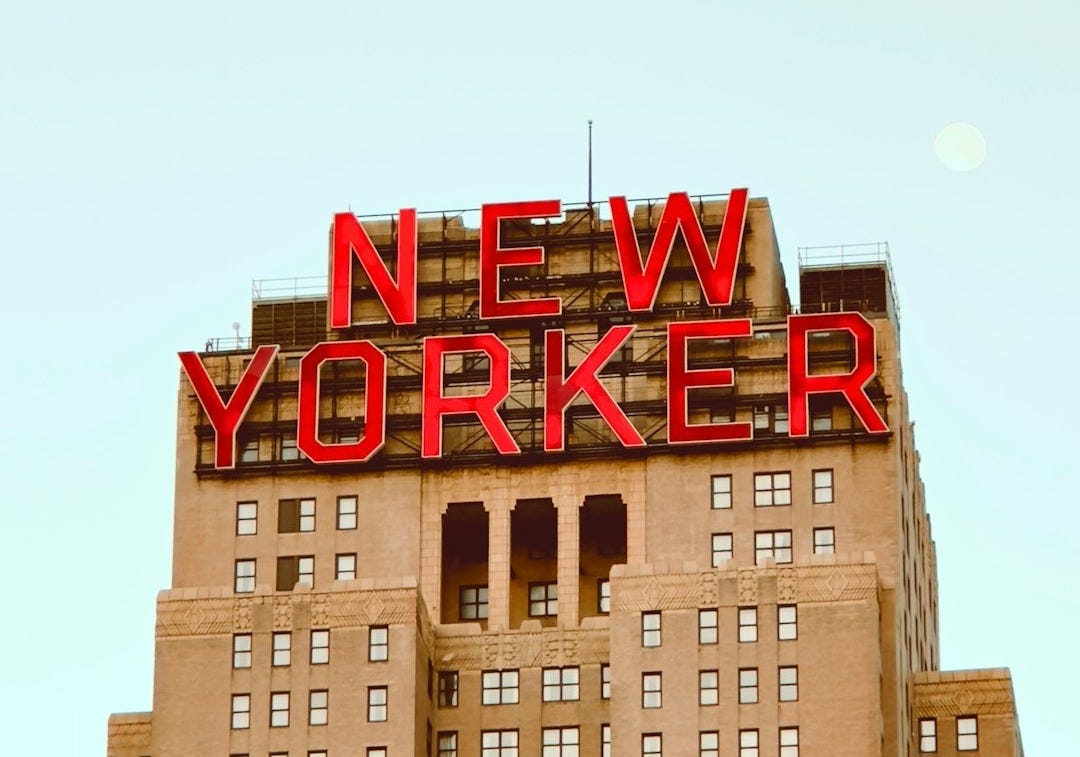
Publisher: The New Yorker
Published: Oct. 25, 2026 online, and in the Nov. 2 print edition
“Wall Cano” pulls at my heartstrings, keeps me chuckling throughout, and leaves me pondering its representation of the real world.
It’s a simple yet effective look at the lives of Laotian refugees in Canada.
The narrator is a 10-year-old child who explains exactly what she sees — their family’s basement apartment with no windows, her mother being propositioned in front of her children, the “wall cano” science project in school — without really understanding the implications.
Those unbiased descriptions give readers a clear picture of the refugee family’s lives — and naturally create an air of deadpan humor that I appreciate. Here’s one passage that I smiled at:
“I didn’t know what homework was. And since my parents had never gone to school themselves, they never asked me about it. I thought that because we spent all day at school sitting at a desk—working—when I got home my evening was supposed to be like Dad’s. It was supposed to be for rest, for watching television as long as my eyes would stay open. I brought schoolwork home with me, but I just left it in a plastic bag by the door.”
There’s a moment in the story when the father begins to cry. The narrator doesn’t understand why. But for the reader, that’s where the point struck:
The father and his family fled their home to a strange place. They’re treated as second-class citizens. He’ll likely never see his country again, and his children don’t understand what they left behind. Yet no one seems to care, but they must go on anyway.
‘Wild Wild West’
A memoir essay by Amanda Rea
Publisher: The Sun Magazine
Published: September 2026
From the perspective of the “rich” girl in “Wild Wild West,” the author — who passes her a mean note — is probably a bully. Or just pathetic. The author couldn’t figure it out.
I don’t think the author is either of those things. I think she’s human.
And that’s why I love when authors are brave enough to share vulnerable memories.
People are complicated. Bullying often comes from a place of hurt. Does that make abusive behavior okay? No. But it’s a reminder to have compassion, especially for children, and for yourself.
The essay also sheds light on bigger societal issues — poverty, alcoholism, child neglect — that leave working class people fighting with each other over scraps:
“Of course you weren’t even slightly rich, but you seemed it at the time, with your French braid and your clothes that smelled like detergent. Every day you came to school with the optimal lunch — a bologna sandwich and a Capri-Sun — and your trailer was a double-wide with a pitched roof that made it look more like a real house.”
Anyway, I wish both girls well today. The “rich” one and the bully.
‘The Saddest Funeral’
A short story by Luis Reynoso, grand prize winner of the 95th Annual Writer’s Digest Writing Competition
Published: October 2026
Publisher: Writer’s Digest
Reckless people have a way of imprinting themselves on their loved ones’ hearts. It can hurt to love them, yet they seem to absorb more than their share of love anyway.
“The Saddest Funeral” starts with the narrator and his sisters in a rainy cemetery at their brother’s funeral. They’d spent so much energy worrying about him in life that they didn’t have much left to say at the end.
In a way, the brother’s life is a parallel to his Latino immigrant family’s. Like his parents, he never quite found his place, couldn’t settle down, not until death.